July 12, 2026
Multilingual welcome guide: essential for hotels welcoming international travelers
International guests expect clear information in their own language. Discover why a multilingual welcome guide has become essential for improving traveler experience and simplifying your team's workload.
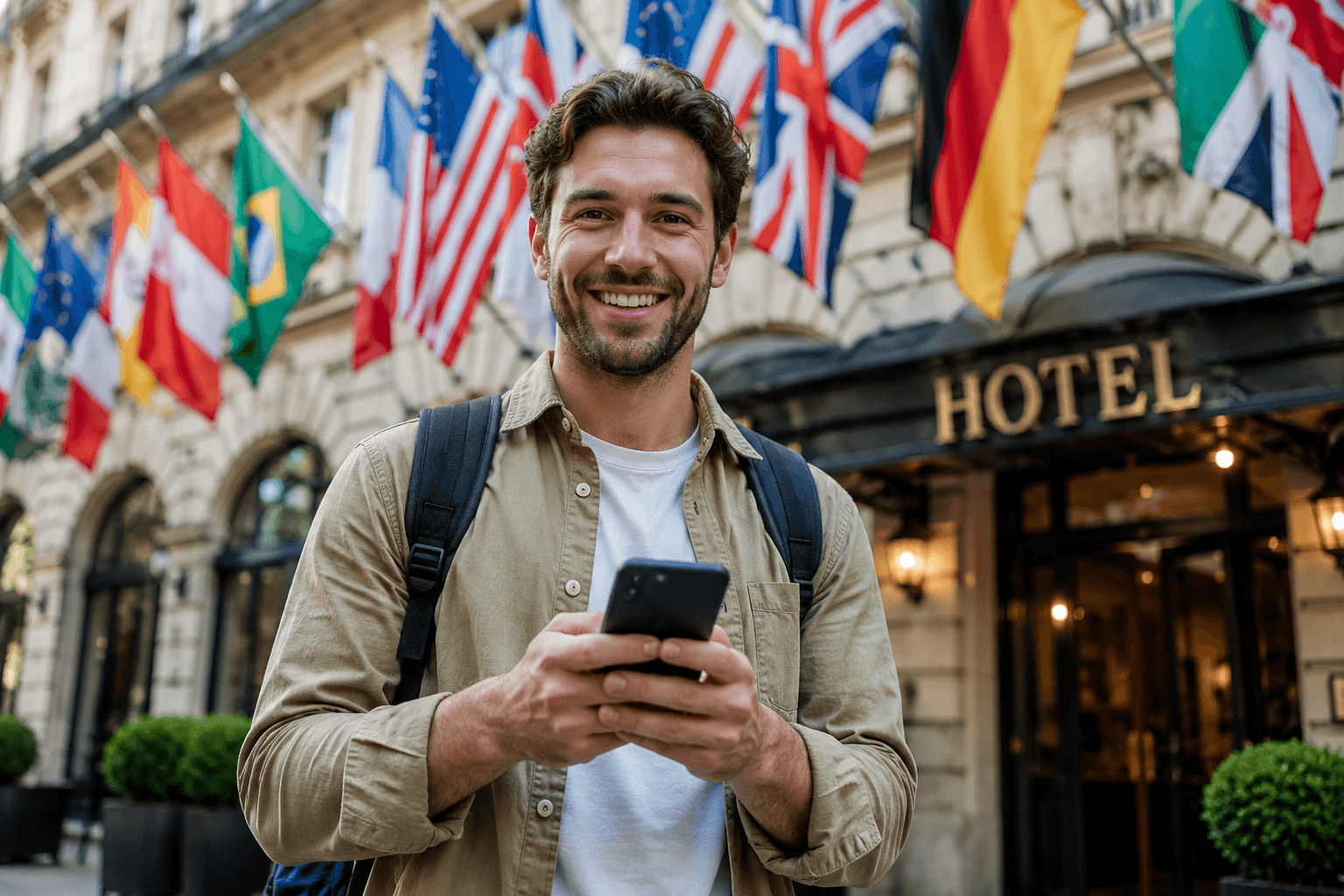
Why translate your hotel's welcome guide into your travelers' languages?
Today, hotels and vacation rentals welcome travelers from all corners of the globe. Yet it's not uncommon for their welcome guide to be available only in the local language, or sometimes only in English.
As a result, some guests don't understand essential information about their stay, make more requests at the front desk, or simply miss out on services offered by the establishment.
Providing a multilingual digital welcome guide translated into each traveler's language improves guest experience from the moment they arrive, while making staff work easier.
Here's why this feature has become a real asset for hotels and vacation rentals.
1. Not all your travelers speak multiple languages
While English is widely used in tourism, it's not the native language of most travelers. Many can understand it in broad strokes but struggle when it comes to expressing their needs or understanding important information about their stay.
A German couple, a Spanish family, an Italian traveler, or a Dutch tourist will naturally feel more comfortable consulting important information in their own language.
This immediate comprehension reduces hesitation and reassures the traveler from arrival.
2. Better understanding of how the establishment operates
The welcome guide typically contains essential information:
- breakfast times;
- Wi-Fi setup;
- parking;
- spa or pool;
- check-in and check-out;
- house rules;
- useful contact numbers.
When this information is available in only one language, some travelers may misinterpret it or not understand it at all.
Adapted translation helps avoid these situations and limits traveler errors or misunderstandings.
3. Fewer questions at the front desk
Each question asked at the front desk takes time.
When information is available in the traveler's language, they find their answer more easily without needing to contact staff.
This helps reduce requests about:
- Wi-Fi password;
- breakfast times;
- checkout procedures and times;
- available facilities;
- recommendations around the hotel.
The team can dedicate more time to requests that truly require their intervention.
4. Better experience for international travelers
A guest who easily understands all useful information gets more out of their stay.
They discover the hotel's services more easily, nearby activities, or restaurant recommendations.
This simplicity directly contributes to a smoother and more pleasant experience.
It can also positively impact reviews left after the stay. A traveler who easily finds needed information feels more independent and enjoys a seamless experience. This satisfaction often reflects in online comments, where information accessibility and quality of service are regularly highlighted. Conversely, misunderstandings or lack of information can quickly become negative points in reviews, even if the stay went well.
5. A simple translated PDF isn't always enough
To cater to international guests, some establishments offer multiple PDF versions of their digital welcome guide.
However, this solution has several limitations:
- Every update must be made across all languages;
- The risk of forgetting an update is significant, potentially leading to different information being distributed depending on which language is consulted;
- On smartphones, consulting multiple PDF files remains impractical and often forces travelers to zoom to read information.
With RoomPage, a single version of content is sufficient. The welcome guide is automatically available in the traveler's language, guaranteeing information that's always consistent and up-to-date, while offering simple, smooth, and pleasant viewing on smartphones.
6. Automatic translation simplifies management
With a digital welcome guide, a single version of content is enough.
Travelers automatically view information in their language without having to search for a specific version.
For the establishment, this significantly simplifies update management since there's no longer a need to maintain multiple separate guides.
Information remains consistent for all travelers, regardless of their language.
RoomPage: an automatically translated welcome guide
At RoomPage, we designed the digital welcome guide to be accessible to as many travelers as possible.
Content can automatically be viewed in the traveler's language, with no app download or need to create multiple guide versions.
Whether practical information, hotel services, or local recommendations, every guest can quickly access essential information in a language they understand.
This approach improves traveler experience while simplifying operations for establishments.
Conclusion
Translating a welcome guide is no longer reserved for large hotel chains.
Today, travelers expect easy access to important information in their language.
A multilingual digital welcome guide reduces misunderstandings, limits front desk inquiries, and delivers a smoother experience from arrival.
For hotels welcoming international guests (or vacation rentals), this has become a genuine lever for improving guest experience.